
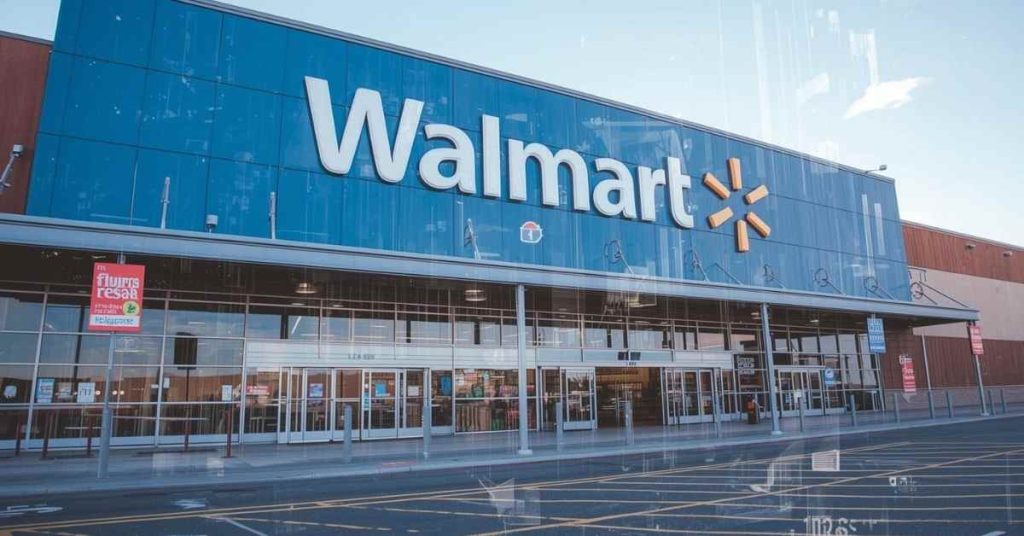
Walmart’s eCommerce sales jumped 24% in Q4 FY26, marking the eighth straight quarter of double-digit digital growth and solidifying its push against Amazon. This surge reflects a broader shift toward omnichannel retail, fueled by AI tools, ultrafast delivery, and ad revenue gains. As a veteran eCommerce watcher, I’ve seen Walmart evolve from a brick-and-mortar behemoth into a digital contender over the past two decades.
Article Overview
- Walmart reported a 24% global eCommerce sales increase in Q4 FY26 to represent 23% of total net sales, driven by 27% U.S. growth, over 60% rise in ultrafast delivery orders under three hours, and AI assistant Sparky boosting average order values by 35%.
- The retailer’s omnichannel strategy leverages 4,600+ U.S. stores for fulfillment, alongside marketplace expansion and 37% global ad revenue growth to $6.4 billion in FY25, positioning it to challenge Amazon’s dominance while attracting higher-income shoppers.
- Under new CEO John Furner, Walmart eyes sustained digital momentum with analyst-projected 9.5-12.7% earnings growth through 2028, though high 42X forward P/E and competitive pressures from Target and Costco demand vigilant execution.
Q4 Earnings Breakdown
Walmart posted total Q4 FY26 revenues of $190.7 billion, up 5.6% year-over-year, with operating income climbing 10.8% as higher-margin digital and ad businesses offset cost pressures. Global eCommerce sales drove much of this, rising 24% and accounting for 23% of net sales, the eighth consecutive quarter above 20% growth. U.S. comparable sales excluding fuel grew 4.6%, fueled by transaction gains and market share from upper-income households.
In the U.S., e-commerce specifically jumped 27%, powered by store-fulfilled pickup, delivery, and marketplace additions. Walmart International saw 7.5% constant-currency net sales growth, with eCommerce hitting 28% of sales in key markets like China (over 50% digital) and Flipkart’s 15-minute deliveries in 30+ Indian cities. CFO John David Rainey noted during earnings calls that advertising and membership fees made up about one-third of Q4 operating income, highlighting the shift to profitable digital streams.
Drivers of Digital Surge
Store-fulfilled services form the backbone, with over 500 million orders handled by stores last year, blending physical inventory with online demand for reliability rivals cannot match. Ultrafast delivery under three hours grew over 60% year-over-year, drawing premium customers whose orders carry higher values. This convenience play has Walmart leading U.S. online grocery at 31.6% share versus Amazon’s 22.6%, with 48% of its grocery eCommerce orders same-day.
AI tools like Sparky, the in-app shopping assistant, lift user order values by 35% through personalised recommendations, while backend agents like My Assistant and Wallaby cut associate time on tasks. Marketplace growth adds premium brands via partnerships with Rebag and StockX, expanding beyond Walmart’s core to lure discerning shoppers. As Rainey put it in investor discussions, “We’re not necessarily content with the number of sellers… this is a vehicle to expand our assortment”.
Advertising via Walmart Connect exploded 41% in the U.S. and 37% globally to nearly $6.4 billion in FY25 (including VIZIO’s triple-digit CTV gains), funding further tech bets. These elements create a flywheel: more traffic boosts ads, which subsidise low prices and fast delivery, pulling in volume.
Walmart vs Rivals
Walmart trails Amazon in overall eCommerce scale—Amazon’s 2024 revenue hit $638 billion to Walmart’s $681 billion total, but Walmart’s digital slice grows faster from a lower base. Walmart’s edge lies in grocery and omnichannel, where its store network enables cheaper, faster fulfilment than Amazon’s warehouses alone.
| Metric (Recent Periods) | Walmart | Amazon | Target | Costco |
| Global eCommerce Growth (Q4 FY26 / Latest Q) | 24% | N/A (slower est.) | Same-day: $14B in 2025 | 22.6% digital comps |
| U.S. Online Grocery Share | 31.6% | 22.6% | N/A | N/A |
| Ad Revenue Growth | 37% to $6.4B FY25 | Strong but unspecified | N/A | N/A |
| Fast Delivery Growth | >60% (<3 hrs) | Expanding to 2,300 cities | Next-day expansion | App traffic +45% |
| Forward P/E Ratio | 42.18X | Lower industry avg 38.92X | N/A | N/A |
Target’s same-day services hit $14 billion in 2025 (two-thirds of digital sales), while Costco’s digital comps rose 22.6% on app surges. Yet Walmart’s scale—4,600 stores—gives it unmatched fulfilment density, a moat in a world craving speed.
Strategic Shifts Under New Leadership
Doug McMillon stepped down on January 31, 2026, handing the reins to John Furner, ex-U.S. CEO, amid this digital pivot. McMillon transformed Walmart since 2014, turning it tech-first with AI partnerships like Google and potential Perplexity ties for search shifts. Furner inherits momentum, with Q4 as the first under his watch, promising continuity in omnichannel and AI.
Investments target “agentic AI” for suppliers and devs, plus automation in stores, to cut costs and speed decisions. Return on invested capital hit 15.1%, up via disciplined capex on high-ROI digital. Challenges persist: inventory management in volatile categories and sustaining share gains as consumers tighten belts.
Implications for eCommerce Landscape
This 24% jump signals Walmart closing the gap on pure-plays, proving physical assets amplify digital in grocery-heavy markets. Higher-income traction—via premium marketplace and Sparky—diversifies beyond value hunters, stabilising against downturns. Ad flywheel maturity tempers explosive growth rates, but $6.4 billion scale funds’ aggression.
For sellers, Walmart Marketplace offers less saturation than Amazon, with grocery dominance a draw. Consumers gain choice: ultrafast from stores beats drone hype. Broader retail learns omnichannel trumps silos—expect copycats accelerating.
Stock dipped 7.6% post-earnings on valuation worries (42X forward P/E above peers), but analysts forecast 9.5% FY27 EPS growth to 12.7% in FY28. Rainey emphasised, “We grew operating income faster than sales… on solid discipline and higher-margin growth” corporate.
Challenges Ahead
Economic headwinds loom: stretched consumers favour essentials, pressuring discretionary eCommerce. Competition heats—Amazon’s perishables push, Target’s speed, Costco’s loyalty. High P/E demands flawless execution; any digital slowdown could spook investors.
Supply chain risks, from China tariffs under President Trump to automation lags, test resilience. Walmart must balance growth capex with margins, as FY26 ROA hit 8.2%.
Looking Forward
Walmart enters FY27 with Q1 sales guidance of 3.5-4.5% growth, banking on digital to outpace. Sustained 20%+ eCommerce, AI scaling, and ad expansion could make it a $100 billion+ digital powerhouse by decade’s end. As Furner steers, the bet is on tech-physical synergy outlasting rivals’ bets.
This positions Walmart not just as a survivor, but a leader in a $6 trillion global eCommerce arena by 2030. Watch ultrafast metrics and marketplace sellers—they signal if momentum holds.