
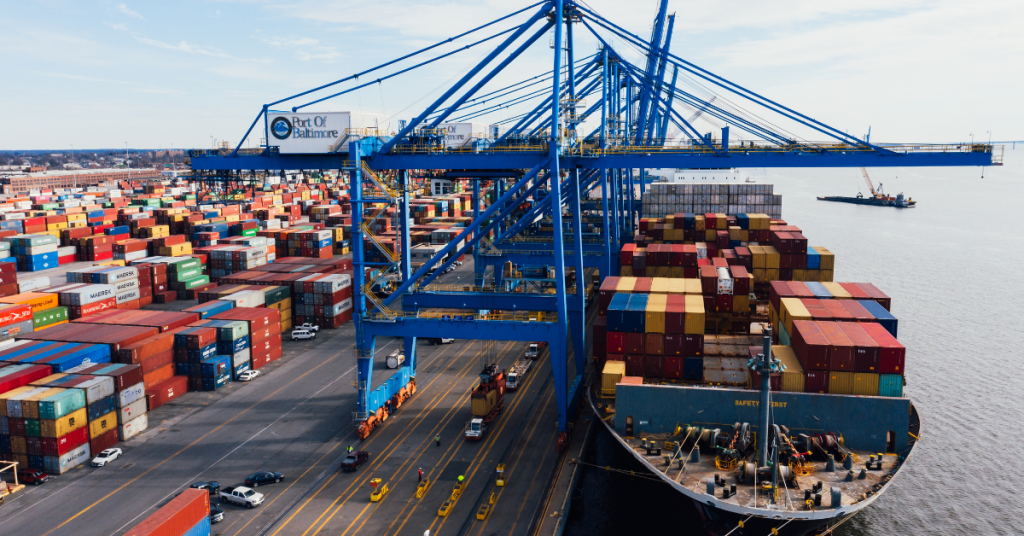
In 2025, China’s cross border e-commerce exports reached an impressive $1.1 trillion, showing a 24% increase compared to the previous year. This highlights Beijing’s shift from traditional trade methods to digital channels. The growth comes as U.S. tariffs from President Trump’s second term put more pressure on regular shipments, pushing Chinese sellers to use platforms such as Shein and Temu to reach Europe and emerging markets.
Record-Breaking Growth Figures
China’s cross border e-commerce sector has always been a strong part of its export economy, but 2025 shows record growth. Exports reached around 7.8 trillion yuan ($1.1 trillion), building on 2024’s already impressive 2.15 trillion yuan, which had grown 16.9 % from the year before. Total trade, including imports, rose steadily, with exports consistently much higher than imports—making up about 79% of the total in recent years.
This growth reflects deeper changes in the market. Consumer goods led the way, accounting for 97.5% of exports in 2024, and the trend continued into 2025 with apparel, electronics, and home goods at the forefront. Guangdong province alone generated $434.7 billion in exports, while Hubei saw volumes jump 95.8% to $109.5 billion, showing regional hotspots supported by pilot zones and logistics hubs. To give more perspective, B2B cross border exports reached $25.1 billion, up 75% from the previous year, showing that wholesale digital trade is also thriving.
Key Drivers: Platforms and Policy Support
At the heart of this export engine are major platforms like Shein, Temu, AliExpress, and Pinduoduo’s global arm. Shein recorded $27 billion in gross merchandise value (GMV) in the first half of 2025 alone, up 15 to 20%, while Temu targeted $100 billion annually after a 50% GMV increase to $35 billion in H1. These apps send billions of low-value parcels directly from Chinese warehouses, avoiding bulk freighters affected by tariffs.
Government support has been key. China now has over 180 comprehensive pilot zones, up from 165 in 2022 and expanded by 15 more cities in April 2025, including all of Hainan Island. These zones provide bonded warehouses for faster clearance, tax breaks such as 70% reduced VAT on select goods, and simpler refunds, cutting delivery times significantly. As Cai Junwei, an official with the General Administration of Customs, said at the 2025 China Langfang International Economic and Trade Fair, “China’s cross-border e-commerce has developed rapidly and has played a positive role in expanding international markets, breaking through traditional trade barriers, and simplifying transaction processes.”
Logistics improvements add to this growth. Bonded imports reached $191 billion in 2025, up 17.2%, with routes like Guangdong-to-EU shipping $126.3 billion, a 30.7% increase. Platforms such as Tmall Global keep 70% of inventory in these warehouses, allowing next-day delivery for over half of their orders.
Navigating Tariff Turbulence
U.S. policy changes under Trump’s 2025 reelection have changed trade flows significantly. New tariffs imposed 125% reciprocal duties on many goods starting in April, and on May 2, de minimis exemptions for China-origin parcels ended, applying 120% tariffs or $100 to $200 per item on postal shipments. This closed a loophole that previously allowed small packages to enter duty-free, hitting traditional U.S.-bound bulk exports hard.
Chinese exporters responded quickly. The U.S. share of cross-border e-commerce exports fell from 36.2% in 2024, as volumes were pushed into Q1 before tariffs fully took effect. Platforms turned to U.S. fulfillment centers or raised prices, but the main shift was elsewhere: low-value “simplified clearance” exports rose 40.9% to $86.9 billion in the first nine months of 2025, keeping pace with the previous year despite the barriers.
Market Rerouting: Europe and Beyond
Europe became the biggest winner. EU-bound exports rose to $264.4 billion, up 42.9%, helped by the bloc’s €150 de minimis threshold, which still lets 91% of parcels under €150—4.5 billion in 2024 alone—enter duty-free from China. Shein and Temu took advantage of this, flooding markets with low-cost apparel and sparking complaints from local producers.
Southeast Asia (ASEAN) also grew rapidly, with China’s exports there reaching ¥4.29 trillion ($600 billion) from January to November 2025, up 14.6%, driven by e-commerce. Guangxi’s ASEAN trade through cross-border e-commerce topped ¥30 billion in 2024, more than doubling, supported by RCEP tariff cuts reducing costs by 15 to 20% and cutting delivery times to three days. Russia saw 230.3% export growth, Latin America gained ground, and even B2B Shanghai-to-U.S. shipments surged 25,827% via digital channels.
| Top Destinations for China’s CBEC Exports (2025) | Export Value ($B) | YoY Growth (%) | Key Platforms/Factors |
| European Union | 264.4 | +42.9 | Shein, Temu; €150 de minimis |
| United States | ~250 (est., down from 36% share) | – (tariff-hit) | Pre-tariff surge, B2B shift |
| ASEAN/Southeast Asia | ~150 (est. from ¥4.29T total) | +14.6 | TikTok Shop, RCEP cuts |
| Russia | N/A | +230.3 | Geopolitical demand |
| UK/Germany (combined 2024 base) | ~190 | Steady | Established channels |
This table illustrates the diversification: EU’s explosive growth offsets U.S. declines, with ASEAN providing steady volume.
Platform Strategies in Action
Consider Shein and Temu as examples. Shein’s model, ultra-fast fashion with daily new items, relies on small parcels, reaching $52 billion GMV in 2024 and aiming for $60 billion in 2025 despite tariffs. Temu, Pinduoduo’s global initiative, uses gamified discounts and direct-from-factory shipping, supported by 200 bonded warehouses for faster delivery. Both adapted to U.S. changes by expanding EU operations; for example, 91% of the EU’s low-value e-commerce parcels came from China in 2024.
A realistic scenario: A Guangdong apparel maker facing 125% U.S. tariffs redirects 60% of output to Europe via Temu. Before the shift, U.S. sales brought $1 million monthly at 30% margins. After rerouting, EU volumes increase 50% through de minimis parcels, but margins fall to 25% because of logistics. Net result: a 20% revenue increase, based on similar cases in textiles. This flexibility—stockpiling before tariffs and diversifying platforms—drives the growth.
Broader Industry Implications
For global e-commerce, China’s dominance is causing concern. EU lawmakers are considering 2028 customs reforms to close de minimis loopholes, potentially mirroring U.S. restrictions. Western brands face tougher competition from low-cost Chinese sellers, losing market share in fast fashion, where Shein holds 20 to 30% in some segments, and in electronics.
Still, opportunities exist. Foreign sellers use these platforms to enter China, with Tmall Global and JD Worldwide offering imported beauty and health products. Challenges remain—the new 2025 E-Commerce Law requires customs registration for foreign sales over ¥1M, data localization, and e-CNY payments—but pilot zones help ease these rules. Overall, this model shows resilience, combining government support with technological flexibility.
Risks on the Horizon
Not all smooth. Intensifying regulations could slow momentum: EU parcel taxes loom, U.S. duties escalate, and domestic competition heats up with Douyin and Little Red Book. Supply chain strains from global slowdowns add pressure, though EVs and budget goods propped up totals. If de minimis closes bloc-wide, rerouting to ASEAN might overload those markets.
Sustained Momentum with Caution
China’s cross-border e-commerce exports are expected to maintain 15 to 20% growth into 2026, driven by over 200 pilot zones, AI-powered logistics, and Belt & Road digital hubs. Exporters need to diversify further into markets like Latin America and Africa and invest in local fulfillment to avoid tariffs.
For the global market, this shift changes trade dynamics: digital parcels are now competing with shipping containers, creating a need for new rules. As a long-time observer, I have seen many cycles, but this digital shift seems lasting, transforming e-commerce from Beijing to Berlin.